Lizzo has spent years telling the world she loves herself loudly, unapologetically, and on her own terms. But what happens when the world won’t stop watching, critiquing, and policing your body—even when you’ve made body positivity your brand?
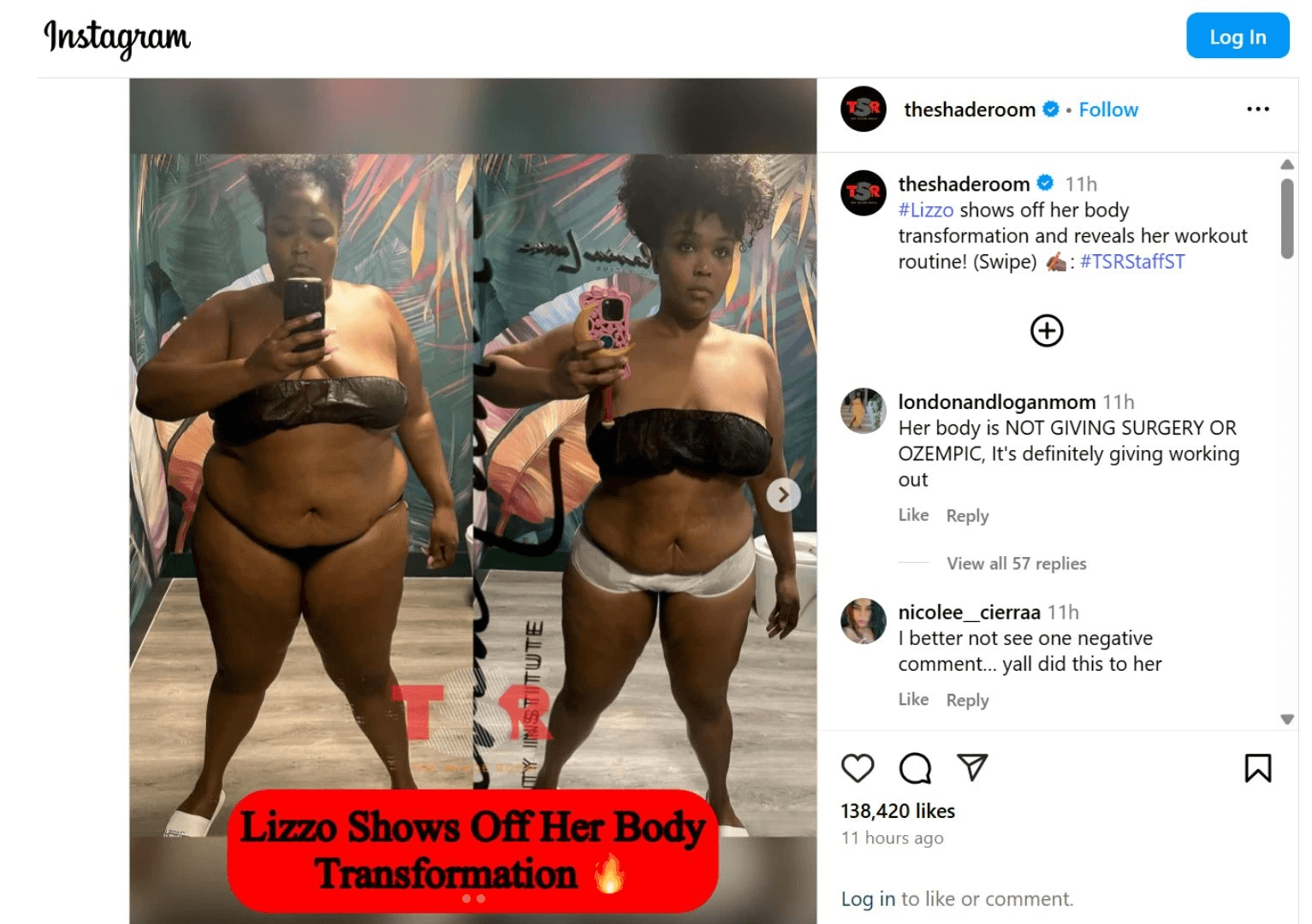
This week, Lizzo’s body transformation photos hit the internet, and the reactions were swift: celebration, criticism, confusion, and a collective moment of questioning what body positivity really means in a culture obsessed with thinness.
Lizzo isn’t alone. We’ve seen it with Adele, who spoke about her weight loss journey while acknowledging that the public obsession with her body felt invasive. We saw it with Jonah Hill, who has repeatedly asked people to stop commenting on his body, whether he’s bigger or smaller. We’ve seen it with celebrities like Jennifer Hudson, who moved from a public figure celebrated for her curves to headlines praising her for her smaller frame. And Rebel Wilson, who said she was told she would lose her “funny” roles if she lost weight, but chose to anyway for health reasons.
The conversation is complicated. For many, weight loss is deeply personal and can intersect with health, mental wellbeing, and autonomy. But we can’t ignore the structural forces that make weight loss almost inevitable in the public eye, no matter how radical your self-love is.
In a world where fatphobia is relentless, even the loudest voices of body positivity are not immune to the pressure to shrink. The narrative is often sold as “health” or “wellness,” but we need to ask: Would these choices look different if living in a fat body wasn’t met with constant surveillance, discrimination, and online hate?
This isn’t about judging Lizzo or any other celebrity for changing their bodies. It’s about acknowledging that body positivity, as a movement, is not an impenetrable shield against a culture that equates thinness with worth.
If Lizzo, with her fame, talent, and resources, still feels the pressure to change her body to exist in this world, what does that say for the rest of us?
We need to build a world where loving your body isn’t radical, where wellness isn’t synonymous with weight loss, and where fat people can exist without being turned into public spectacles of transformation.
Until then, let’s remember: Your worth is not measured in pounds lost or gained. And no one owes the world their body in any particular form.