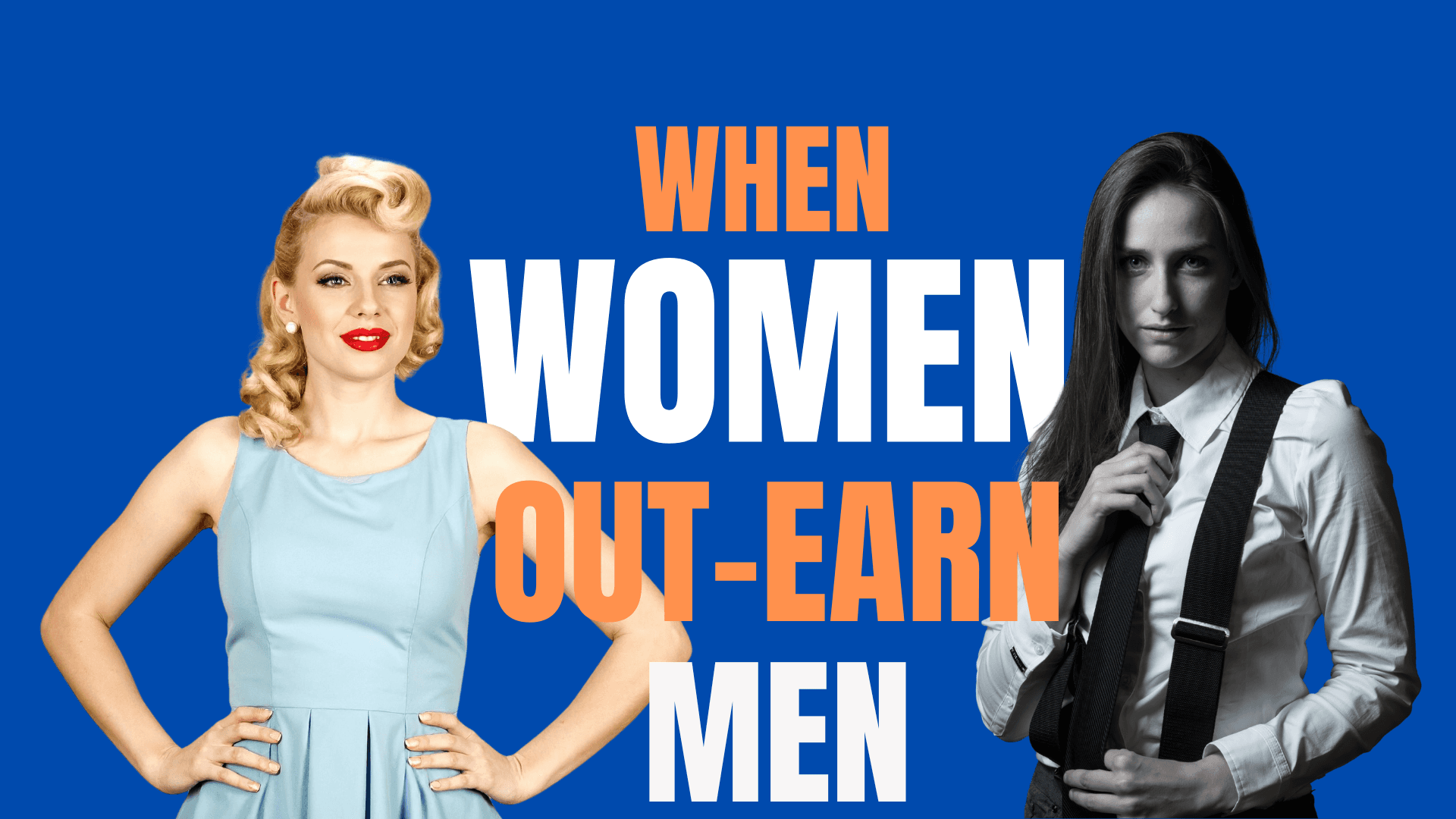
There’s a viral saying making the rounds on social media: Men want a 1950s wife but with 21st‑century contributions. It’s a blunt, funny, and painfully accurate summary of the tension that defines modern relationships — nostalgia for gender roles that no longer exist colliding with the reality of women who now out‑earn, out‑educate, and out‑organize their partners.
“Who wears the crown when the paycheck flips?” That’s not just a question for academics — it’s a viral debate spilling across TikTok stitches, messy relationship podcasts, Reddit confessionals, and endless group chats. For decades, the household was sold as a one‑note script: man earns, woman supports. That script was reinforced everywhere: TV sitcom dads who couldn’t cook a meal, policies built on single‑income families, and pop songs about men as providers. Now the script is glitching, flipping, and the backlash is loud. More women are out‑earning men in Canada and globally, and that reality rattles old power plays, fuels endless hot‑takes about “masculine energy” vs. “feminine energy,” sparks think‑pieces on whether dating is “broken,” and lays bare how fragile some egos really are when independence and income collide. The conversation has escaped ivory towers and landed squarely in memes, algorithms, and living rooms — forcing a cultural reckoning about what we really mean by family, partnership, and power.
Introduction
In the dynamic realm of technology, innovation is a constant companion, shaping the way we live, work, and connect. From artificial intelligence to cutting-edge gadgets, this article explores the transformative power of technology and its impact on various aspects of our daily live
There’s a viral saying making the rounds on social media: Men want a 1950s wife but with 21st‑century contributions. It’s a blunt, funny, and painfully accurate summary of the tension that defines modern relationships — nostalgia for gender roles that no longer exist colliding with the reality of women who now out‑earn, out‑educate, and out‑organize their partners.
“Who wears the crown when the paycheck flips?” That’s not just a question for academics — it’s a viral debate spilling across TikTok stitches, messy relationship podcasts, Reddit confessionals, and endless group chats. For decades, the household was sold as a one‑note script: man earns, woman supports. That script was reinforced everywhere: TV sitcom dads who couldn’t cook a meal, policies built on single‑income families, and pop songs about men as providers. Now the script is glitching, flipping, and the backlash is loud. More women are out‑earning men in Canada and globally, and that reality rattles old power plays, fuels endless hot‑takes about “masculine energy” vs. “feminine energy,” sparks think‑pieces on whether dating is “broken,” and lays bare how fragile some egos really are when independence and income collide. The conversation has escaped ivory towers and landed squarely in memes, algorithms, and living rooms — forcing a cultural reckoning about what we really mean by family, partnership, and power.
The Numbers
According to Statistics Canada, nearly 40% of heterosexual couples under 35 now report the woman earning equal to or more than the man.
Among immigrant and second‑gen families, women are often quicker to level up in professional spaces, tipping household balance.
Globally, McKinsey’s 2020 report found women lead income in 1 of 4 households.
Not side stats. Not outliers. A shift big enough to fuel what some call the “silent panic in boardrooms and the loud complaints in comment sections.”
Household Power Balances
Money should mean more power at home — but reality is messy:
Some women downplay their income to protect fragile masculinity.
Some men double down on control in other parts of the relationship to “compensate.”
Couples who practice full transparency usually thrive, but they’re not the norm.
So is the money really flipping power? Or are we just remixing the same gender script with new paychecks?
Cultural Anxieties
The old script still hums: a man’s worth = his wallet. When women out‑earn men, anxieties spike:
For men: fear of being emasculated, fear of “losing their masculine energy,” fear of becoming irrelevant.
For women: fear of being punished for ambition, labeled “too masculine,” or carrying both the breadwinner AND caregiver load.
On TikTok and Twitter, bruised‑ego men flood comment sections, saying independent women are “too masculine,” “not wife material,” or “intimidating.” Financial independence becomes framed as rebellion. These reactions expose the double bind: women are told to achieve, then punished for achieving.
The result? A culture that hasn’t caught up with economics. And the blunt question remains: will the world adapt to women’s rise, or will women keep shrinking themselves to fit outdated norms?
Feminist Economics Lens
Feminist economics cuts through the noise:
Why is care work still invisible even when women carry the check?
Why is men losing dominance treated like crisis, but women’s exclusion treated like natural order?
How do we normalize dual‑earner households as baseline, not exception?
Gender Parity and Education
Earning more at home ≠ full equality. The gender gap at the top is stubborn:
OECD: women still earn 12–15% less for similar work in Canada.
McKinsey & LeanIn: only 1 in 4 C‑suite leaders is a woman; women of colour are barely there.
Statistics Canada: women now outpace men in degrees, but that hasn’t translated into equal pay or leadership.
The contradiction: women may be running the household finances but are still locked out of the rooms where the real power and wealth get decided.
The Future of Family Economics
Women out‑earning men isn’t a glitch — it’s the new normal. But for it to liberate instead of burden:
Normalize dads taking parental leave.
Redefine masculinity outside of paychecks.
Put real value on care and emotional labour.
Each step asks: will we finally match cultural respect to economic reality?
The single‑income fable is dead. Women out‑earning men is fact — and a flashpoint. It forces us to rethink family, power, and what thriving together actually looks like. Progress will stay fragile until we unlearn the myths tying manhood to money and womanhood to sacrifice. And here’s the answer to the provocation: yes, “masculine energy” can exist without paychecks, rooted instead in accountability, emotional presence, and partnership. Equality doesn’t just belong at the kitchen table and the boardroom — it also belongs in classrooms, policy debates, and living rooms where the next generation is watching. The conversation has to move beyond asking whether culture will catch up; it’s about actively reshaping culture so power, care, and money are no longer coded as gendered currencies but shared responsibilities.